What Competitive Junior Golf Really Costs a Family
Entry fees, lessons, clubs and travel: what competitive junior golf costs, why talented San Antonio kids get priced out, and how FGA helps close the gap.
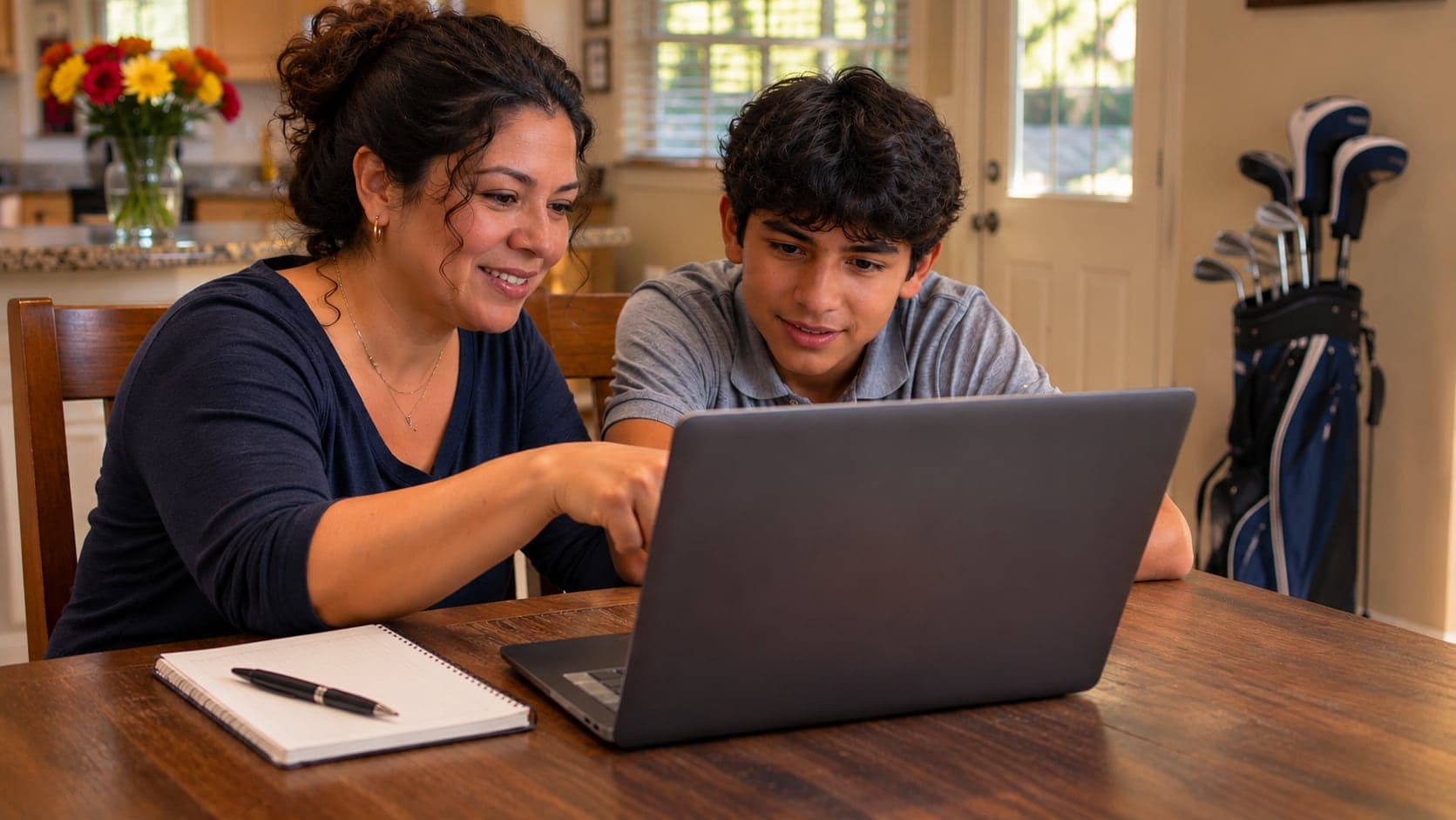
It is late on a weeknight, and a parent is at the kitchen table with a laptop open to a junior tournament registration page. The entry fee is right there. Then come the hotel, the gas, the new glove, the lesson the coach recommended before the event. By the time the math is done, the question is no longer which tournament to play. It is whether to play at all.
That is the reality of competitive junior golf, a sport that can cost a family thousands of dollars a year and, on an aggressive national schedule, close to $20,000. The money flows to four places: tournament entry fees, lessons, equipment and travel. All four climb at exactly the moment a young golfer starts getting good, which is why, for so many talented kids, the barrier is not ability. It is the bill.
Tournament Entry Fees
Tournaments are where junior golfers earn experience, rankings and recognition, and they are the first big expense a family meets. On the American Junior Golf Association's national schedule, a qualifier costs $95 to enter and a Preview Series event costs $195. A Junior All-Star event runs $285, and an Open or Invitational runs $295. Membership adds another $95 to $295 a year on top of that.
Those fees stack up quickly. A junior who plays six Open or Invitational events at $295 apiece spends $1,770 on entries alone, before membership and before a single night in a hotel. Most competitive players also fill their calendars with school matches, local events and regional tours, and each one carries its own fee.
There is a catch built into the system, too. Juniors need tournament results to move up, and they need to move up to get noticed. A player whose family can afford two events a year is not truly competing on equal footing with one whose family can afford fifteen, even when the talent is identical.
Lessons and Coaching
Good coaching is what turns raw ability into consistent scores, and it is priced accordingly. Reporting on top junior programs puts a lesson with a leading instructor anywhere from $150 to $800. At two lessons a month, the top of that market comes to roughly $10,000 a year.
Even the low end adds up. Two $150 lessons a month is $3,600 a year, a figure many families cannot come close to. Their kids learn instead from online videos, from a school coach stretched across a whole team, or from a parent doing their best. Some of those kids get remarkably good anyway. Imagine what they could do with real instruction.
Talent should never be lost because the cost of competing became too great.
Equipment
Golf is an equipment sport, and juniors are a moving target. A kid who shoots up over one summer may need longer clubs by fall, and a competitive player needs clubs that actually fit. Reporting on top junior golf estimates a full bag at about $3,000, with a professional fitting adding a few hundred dollars more.
The difference shows up on the course. A fitted set built around a junior's swing helps them hit consistent shots and trust their distances. A secondhand set that is too long, too stiff or too heavy forces compensations, and those can harden into swing habits that are hard to undo. Many talented juniors compete with borrowed or mismatched clubs because that is what the family could find. It works, until it does not.
Equipment is also one cost the community can help with directly. FGA accepts new and gently used clubs, bags, balls, shoes, gloves, apparel and training equipment at two San Antonio drop-off locations, Golf Club of Texas at 13600 Briggs Ranch, San Antonio, TX 78245, and Edwin Watts Golf at 1050 NE Loop 410, San Antonio, TX 78209. Tell the staff the donation is for FGA, or read more about how equipment donation works.
Travel
The bigger the event, the bigger the trip. Hotels, gas, flights and meals add up quickly, usually for a parent and a junior traveling together. Reporting on top junior golf put the average tournament trip at roughly $3,000 and a full national schedule near $20,000 a year.
For San Antonio families, travel is hard to avoid. Texas is a big state, and many of the events that build a junior's record are hours away by car or out of state altogether. Every overnight event means a hotel, meals and often a parent taking time off work.
This is where many promising junior careers stall. The kid did not stop improving. The family simply ran out of weekends it could afford.
Why San Antonio Families Feel It More
All of this lands harder in San Antonio. Half of the city's households earn less than $66,176 a year, compared with a national median of $81,604, and 17.1% of residents live in poverty. A cost that stretches an average American family can sit completely out of reach for many families here.
The city does have strong public golf. The Alamo City Golf Trail runs eight municipal facilities, so plenty of kids can find a place to play. But a public course gives a kid a place to play, not a place in the field. It does not pay an entry fee, book a hotel or fit a set of clubs.
The national picture points the same way. The average family spent $1,016 on a child's primary sport in 2024, an increase of 46% since 2019. Income also shapes who plays at all. Only 24% of kids ages 6 to 12 from homes earning $25,000 or less play sports regularly, compared with 40% of kids from homes earning $100,000 or more, and kids from low-income homes quit because of cost at six times the rate of their peers from high-income homes. Competitive golf sits at the expensive end of all of it.
How FGA Helps Close the Gap
Future Golfers of America exists for the junior golfer who has the talent and the work ethic but not the budget. Selected athletes may receive help with tournament fees, training, equipment, travel and mentorship, along with other approved development opportunities, shaped around what each athlete actually needs.
Parents can start that process themselves, including by nominating their own child. FGA is now selecting its Founding Athlete Class in San Antonio and the surrounding area, and nominations are open through November 30, 2026. A nomination does not guarantee acceptance, and support depends on available funding, but nominating costs nothing. You can read more about how the nomination process works.
Donors can help with the very costs described here. A gift to #DriveForJuniors goes toward entry fees, equipment, coaching and travel for competitive juniors, and 100% of donations support junior golfers directly. Businesses can go further through corporate and Founders Circle partnerships.
Coaches and golf instructors have a part to play as well, since they are often the first to notice when a family starts to struggle with these costs. Our guide for coaches explains how to spot a junior golfer who deserves a nomination and what to include when you write one.
Common Questions
How much does competitive junior golf cost per year?
It depends on the schedule. National entry fees run $95 to $295 per event plus membership, and reporting on top juniors puts lessons with leading instructors near $10,000 a year and an aggressive travel schedule near $20,000 a year.
What is the biggest expense in junior golf?
For juniors on a national schedule, travel and coaching are usually the largest costs. Entry fees are smaller per event but add up quickly across a full season.
Can FGA help with tournament fees?
Selected FGA athletes may receive support for tournament fees, training, equipment, travel and mentorship. It starts with a nomination, which is open through November 30, 2026.
Can a parent nominate their own child?
Yes. Parents, coaches, instructors, educators, mentors, family members and community leaders can all nominate a competitive junior golfer.
Where can I donate used golf clubs in San Antonio?
Drop them off at Golf Club of Texas (13600 Briggs Ranch) or Edwin Watts Golf (1050 NE Loop 410) and tell the staff it is for Future Golfers of America.
Sources
- American Junior Golf Association, Tournament Fees and Benefits
- GOLF.com, "How Much Does It Cost to Raise a Top Junior Golfer?" (2022)
- Aspen Institute Project Play, family spending on youth sports survey (2025)
- Aspen Institute Project Play, low-income kids and the cost of sports (2020)
- Aspen Institute Project Play, Youth Sports Facts: Challenges
- U.S. Census Bureau, American Community Survey 2024 (via Census Reporter), San Antonio
- Alamo City Golf Trail, About Us
- Future Golfers of America, Nominate a Competitive Junior Golfer
- Future Golfers of America, #DriveForJuniors National Fund