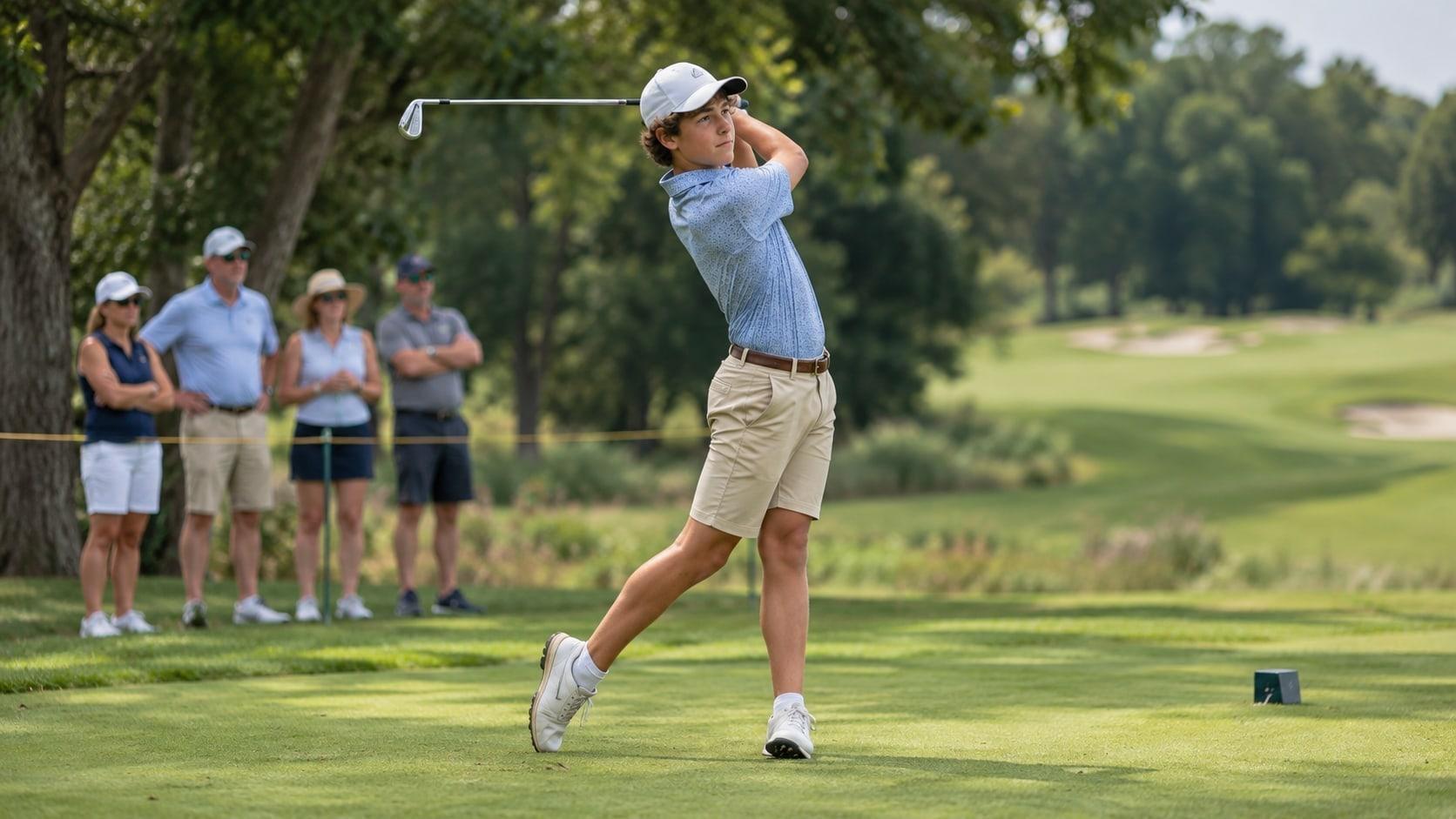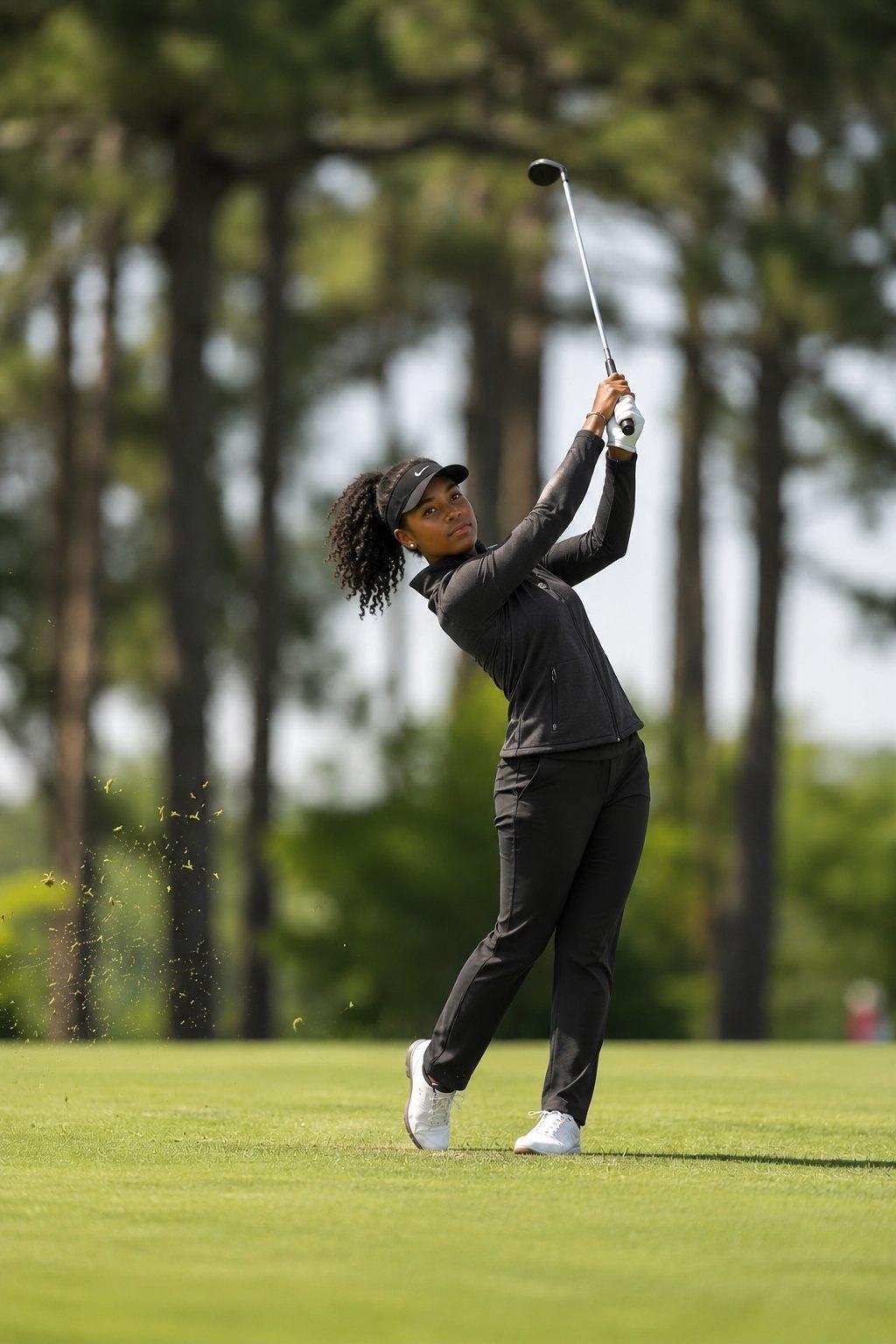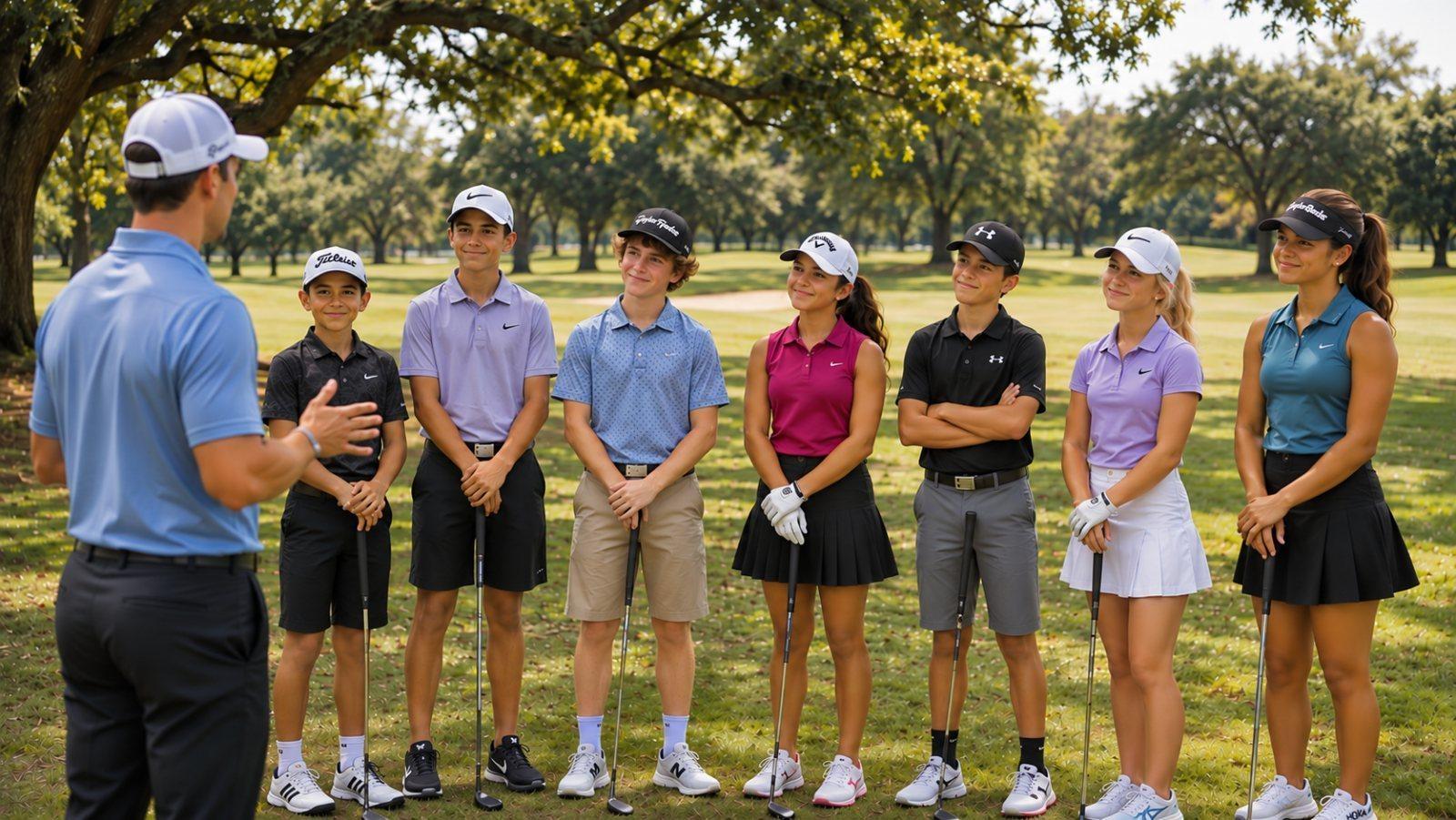
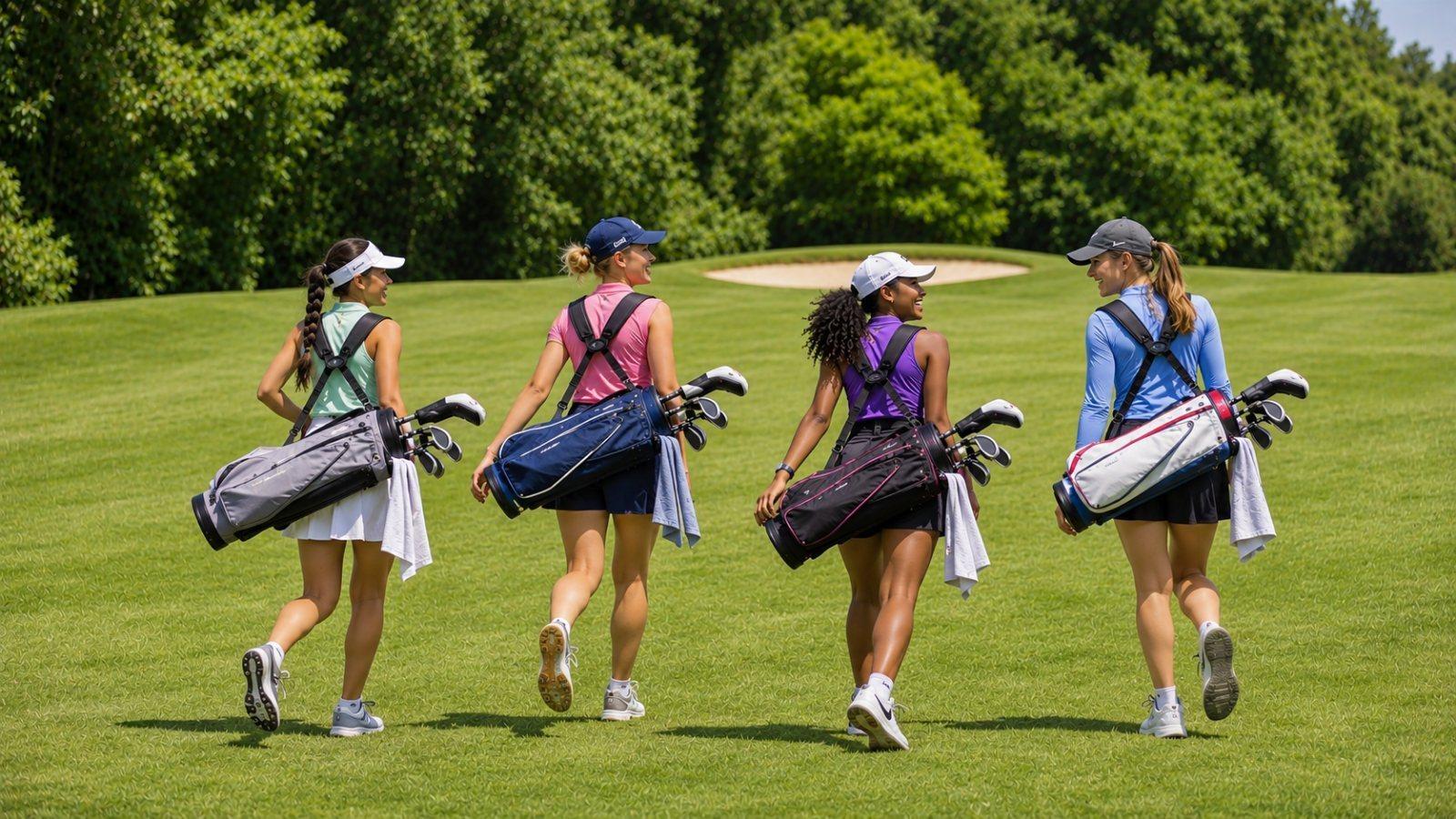
Has your daughter ever looked down the range and realized she was the only girl there? A generation ago, that was normal. A girl who loved golf often practiced alone, played with the boys and learned to be fine being the exception.
That picture is changing fast. Girls now make up 35% of America's junior golfers, up from just 15% in 2000. More girls are playing, more schools have girls' teams, and the college door is slightly wider for girls than for boys. The harder question is whether the girls who get good can afford to stay in the game long enough to find out how far it can take them.
From One in Seven to More Than One in Three
The National Golf Foundation's 2026 report on female golf participation, built on 2025 year-end numbers, tracks the shift in detail. The NGF credits development programs and school teams with helping lift the girls' share of junior golf to 35%. There were about half a million more girls playing on-course golf in 2025 than in 2019, and together they played about 21 million rounds that year.
Put plainly, roughly one junior golfer in seven was a girl in 2000. Today it is more than one in three. That is not a slow drift. It is a different game from the one many of today's golf parents grew up with, and it means a girl who shows up at the range today is far less likely to be standing there by herself.
Women and Girls Are Powering the Growth
The change reaches well beyond juniors. Women and girls now make up a record 28% of on-course golfers, up from 19% in 2011, and more than 8 million female golfers played on a course in 2025. Since 2019, women and girls have accounted for 52% of golf's participation growth. The newest players point the same way: 36% of the 3.3 million beginner golfers are female.
That matters for your daughter in practical ways. The more women who play, the more mothers, aunts, coaches and mentors there are who know the game and can bring a girl into it. A girl is more likely to see someone who looks like her on the first tee, and that kind of example is hard to put a price on.
Bringing girls into golf is working. Keeping them in it takes more.
Belonging Is What Keeps Her Playing
Golf rewards years of steady work. A swing that holds up under pressure takes thousands of repetitions, and the girls who reach their potential are usually the ones who stayed long enough to build it. That is why belonging matters so much. A girl who has friends at the range, a coach who expects her to compete and teammates who show up early has every reason to stay with the game through the awkward years.
If you are a parent, you can probably name the moments that kept your daughter coming back: the first birdie, the first time a coach pulled her aside to say she had something special, the first road trip to a tournament with a teammate. Those moments are not small. They are often the difference between a girl who plays for a few summers and one who competes for years.
Programs are creating more of those moments. At First Tee's seven national teen events in 2025, 55% of participants were female. A girl who walks into an event like that sees, in one glance, that this game belongs to her too.
School Teams Gave Girls a Place to Compete
For many girls, the first competitive round comes with a school team, and the chances to play keep multiplying. The NGF counts approximately 1,000 more high schools with girls' golf teams than a decade ago. Participation keeps climbing as well: 90,176 girls played high school golf in 2025-26, up 6.3% from the year before.
A school team does something special for a girl who loves golf. It gives her a schedule, a coach and a reason to practice with purpose. It puts her in competition every spring, posting scores that count for someone besides herself, and it teaches her to hold her nerve when the team total depends on her last three holes.
Close to FGA's home in San Antonio, girls' golf is thriving. At the 2026 UIL state tournament, a team from the area won the Class 5A girls' title, a run we cover in our guide to Texas high school golf.
A Slightly Wider College Door, and Other Roads Too
For girls who want to play in college, the numbers hold some good news. A girl who plays high school golf has a slightly better chance of playing NCAA golf than a boy does. The NCAA's 2024-25 figures show that 6.9% of high school girls' golfers go on to NCAA golf, compared with 5.4% of boys. The gap holds at the Division I level, where the rates are 2.7% for girls and 1.8% for boys.
The rules changed in 2025, too. Under NCAA Division I Bylaw 17.2, which took effect July 1, 2025, men's and women's golf each have a roster limit of nine at schools that are part of the House settlement or opt in. Those schools are no longer held to sport-specific scholarship limits. Under the old system, Division I golf aid was capped at 6 scholarships for women and 4.5 for men.
Room on paper is not the same as money in hand. The American Junior Golf Association has cautioned that it is unlikely many schools will fund golf programs to the full allotment. For the details, see from junior golf to college golf: the real odds.
College is one good path, not the only one. Some girls will chase professional golf. Some will play elite amateur events for decades. Some will simply keep competing because they love the walk, the scorecard and the people they meet along the way. Every one of those roads deserves support, and none of them is a lesser choice.
Where Girls Still Slip Away
The NGF also flags a warning sign. Women are around twice as likely as men to become lapsed golfers, which the NGF calls an indication of retention challenges. Bringing girls into the game is working. Keeping them in it takes more.
Once a girl starts competing, cost often decides how long she keeps going. The average U.S. sports family spent $1,016 on a child's primary sport in 2024, up 46% since 2019, and competitive golf sits well above that average. A national junior event can cost $95 to $295 just to enter. A full set of clubs that fits runs about $3,000, and balls, gloves, shoes and apparel for a competitive season add roughly $1,800 to $1,900. A growing girl may need some of that more than once a year.
Those costs push hardest on families with the least. Kids from low-income homes quit sports because of cost at six times the rate of kids from high-income homes. For a talented girl, that can mean stepping away from the game right when her scores were starting to drop, and nobody outside her family ever knowing how close she came.
Help the Next Girl Keep Competing
Future Golfers of America supports competitive juniors, girls and boys alike, and Fund a Junior was built to help at the moment it counts. If you are the parent or legal guardian of a competitive girl golfer anywhere in the United States, you can ask FGA for help with clubs, shoes, lessons, travel or a tournament entry fee. FGA reviews each request, and when one is funded, FGA pays the store or tournament directly. You do not front the money and wait to be paid back.
Asking is free, and it also gives your daughter a free FGA Junior Membership. If she is serious about the game and the bills are getting in the way, that request is worth making tonight.
If you want to help a girl stay in the game, visit Fund a Junior. You choose the girl you want to back and know exactly what your gift makes possible. Companies and organizations that care about girls in sport can partner with FGA. FGA cannot do this alone. It takes golfers, golf families and golf businesses giving together.
Send This to Her Corner
Every girl who sticks with golf has a corner: a parent who drives her to the course, a coach who believes in her, a teammate who makes practice fun. If you are in someone's corner, send them this.
Send it to the mom who keeps quiet about the cost of next month's event, the coach whose best player is outgrowing her clubs, or the woman who learned the game late and wants the next girl to have an easier start. The rise of girls' golf is one of the best stories in sports. Help make sure the girls writing it get to finish.
Common Questions
What percentage of junior golfers are girls?
Girls make up 35% of U.S. junior golfers, up from 15% in 2000.
How many girls play high school golf?
In 2025-26, 90,176 girls played high school golf, up 6.3% from the year before.
Do girls have a better chance of playing college golf?
Slightly. NCAA figures for 2024-25 show 6.9% of high school girls' golfers go on to NCAA golf, compared with 5.4% of boys.
Why do girls stop playing golf?
The NGF reports that women are around twice as likely as men to become lapsed golfers. For competitive girls, cost is a major factor, since entry fees, fitted clubs and travel add up quickly.
Can families get help paying for a girl's golf tournaments or clubs?
Yes. A parent or legal guardian of a competitive junior golfer in any U.S. state can request help through Fund a Junior. When a request is funded, FGA pays the store or tournament directly.
Sources
- National Golf Foundation, Female Golf Participation 2026 (2025 year-end numbers)
- National Golf Foundation, Golf Industry Facts (2025 data)
- NFHS, High School Sports Participation Survey (2025-26)
- NCAA, Probability of Competing Beyond High School (2024-25)
- NCAA Division I Bylaw 17.2, Roster Limitations (adopted June 6, 2025; effective July 1, 2025)
- NCAA, "DI Board of Directors Formally Adopts Changes to Roster Limits" (June 23, 2025)
- American Junior Golf Association, House v. NCAA and College Recruiting (updated February 2025)
- First Tee, 2025 Annual Review
- Aspen Institute Project Play, family spending on youth sports survey (2025)
- Aspen Institute Project Play, low-income kids and the cost of sports (2020)
- American Junior Golf Association, Tournament Fees and Benefits
- UIL, 2025-2026 5A Girls Golf State Results
- Future Golfers of America, Nominate a Competitive Junior Golfer
- Future Golfers of America, #DriveForJuniors Holiday Drive
- GOLF.com, "How Much Does It Cost to Raise a Top Junior Golfer?" (2022)
- Future Golfers of America, Fund a Junior