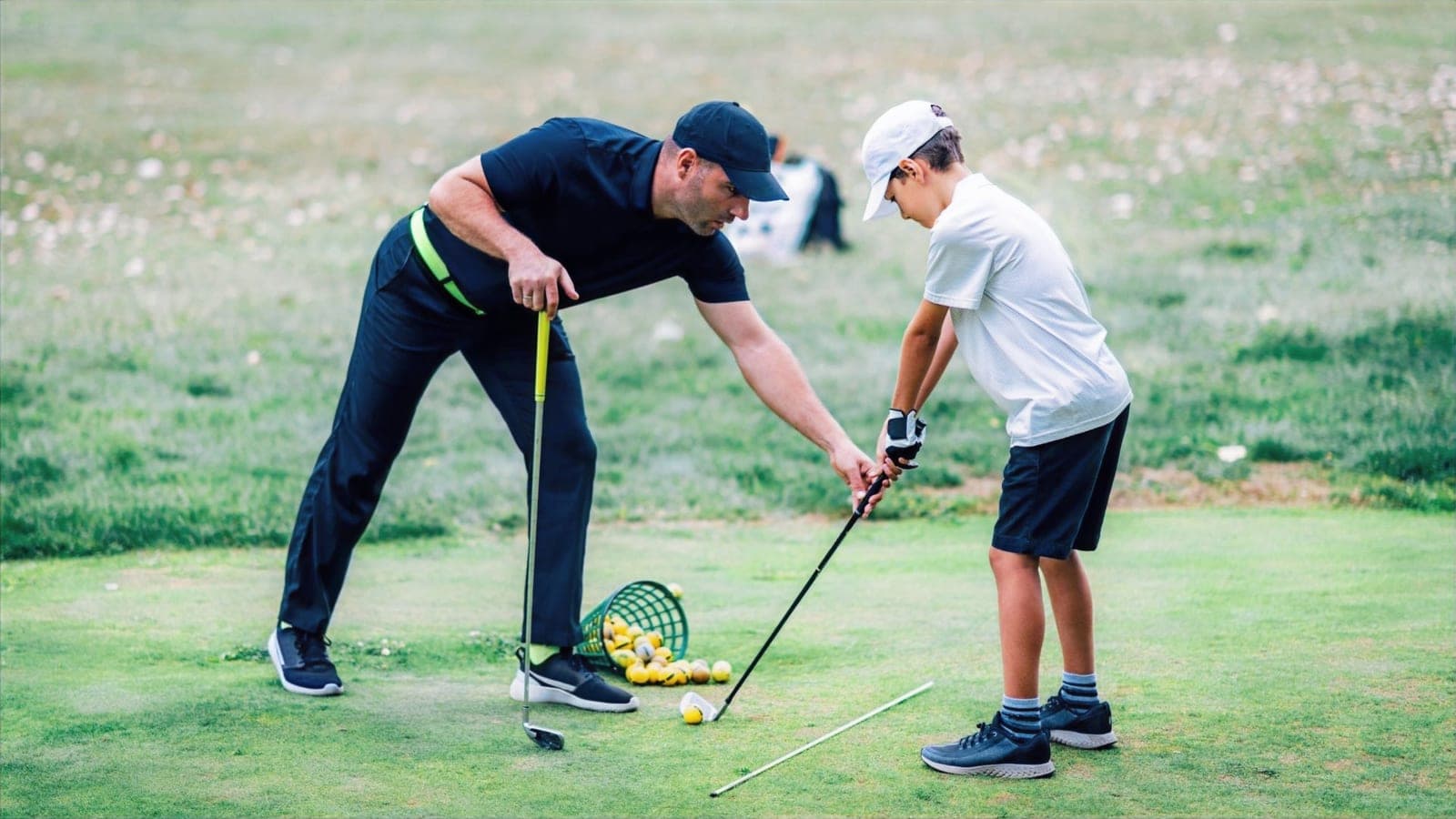
Secondhand, Not Second-Best: Finding Used Golf Clubs That Fit Your Kid
Used junior golf clubs are a great buy if they fit. Why length, weight, flex and grip matter, where to look, how many clubs kids need and when to size up.
A good set of junior clubs does not have to be new. It has to fit. A used set sized for your child's height will do more for a young swing than a shiny set they are supposed to grow into, and far more than an adult set with a few inches cut off the shafts.
Here is why fit matters so much for kids, where used junior clubs turn up, how many clubs a junior really needs and how to tell when it is time to move up a size.
Why Fit Matters More for Kids
An adult can muscle a club that is a little off. A child usually cannot. When a club is too long, too heavy or too stiff, a young player bends their swing to make it work, and those workarounds can turn into habits. Speaking to GOLF.com, fitting expert Tim Briand of True Spec Golf warned that poorly fitted clubs can shape a young player's swing and even their physiology.
Fit for a junior comes down to four things: length, weight, flex and grip. Briand's list for a proper junior fitting covers the correct lengths, lie angles, shafts, shaft weights, overall club weights, grip sizes and grip weights. In plain terms, the club should be the right length for your child's body, light enough to swing freely, flexible enough to load at a child's speed, and wearing a grip small enough for small hands. Junior clubs typically come with smaller grips for exactly that reason.
Age is a poor guide, because some kids grow faster than others. Briand recommends fitting by height and swing speed instead, and U.S. Kids Golf sizes its clubs by height and ability, not age.
Start With a Tape Measure
The simplest first step costs nothing. U.S. Kids Golf asks parents to measure their player's height in inches with shoes on, then match it to a size. Its height ranges run in three-inch steps, from 36 to 39 inches up to 66 to 69 inches. If you are looking at a used set from a maker that sizes by height, look up the height range for that model before you buy.
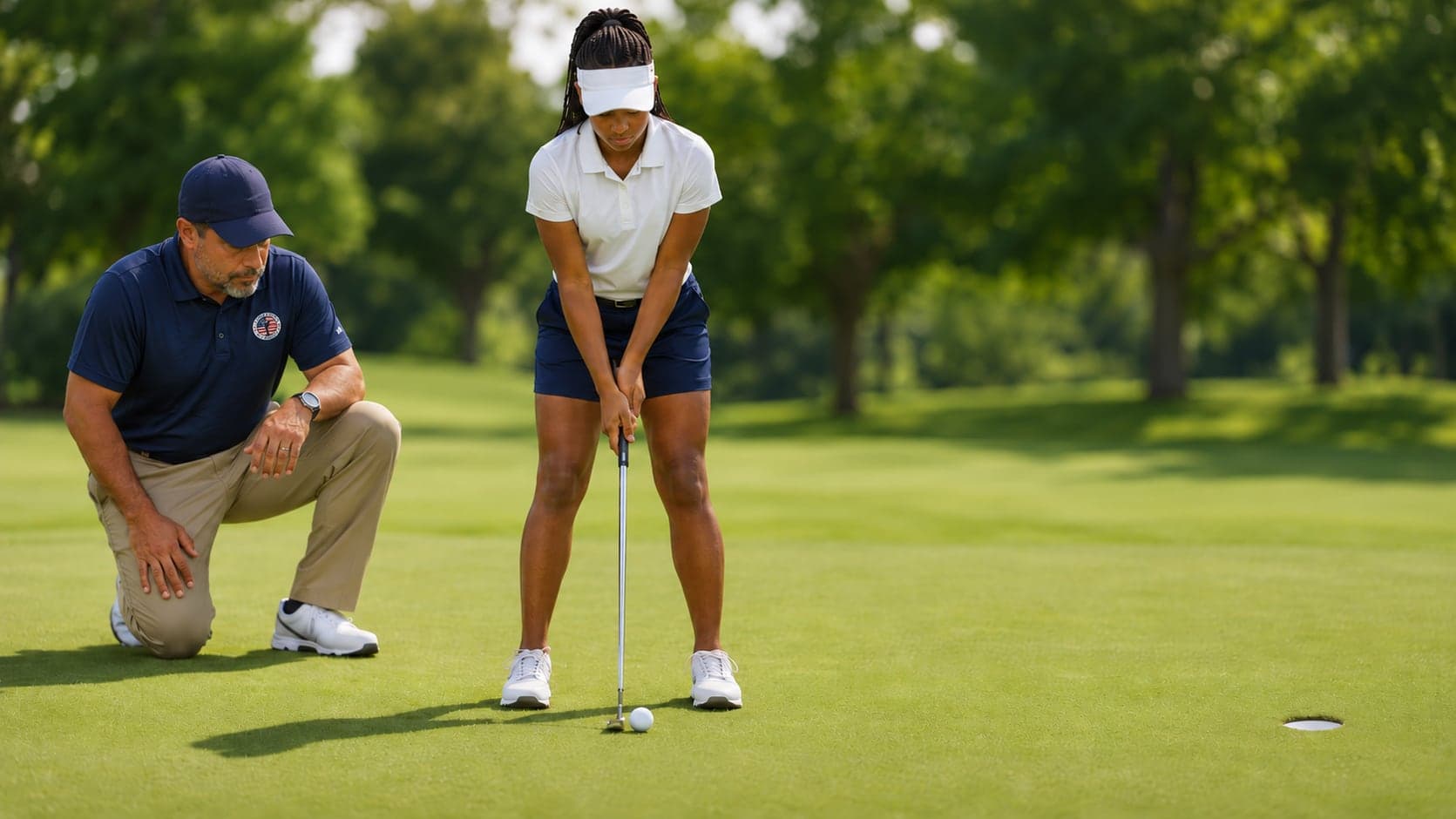
Then check the clubs on your child, not just on paper. Have them take their normal setup with an iron. If the toe or the heel of the club sticks up off the ground, or they have to choke far down the grip to feel comfortable, the set is not the right length. A club that feels heavy to lift at the top of the swing is too heavy, whatever the tag says.
Look closely at the grips while you are at it. A grip that is slick, cracked or worn smooth makes a club hard to hold, but grips can be replaced, so a worn grip on an otherwise good set is not a reason to walk away.
A used set that fits will do more for a young swing than a new set they have to grow into.
Where Used Junior Clubs Turn Up
The best sources are often the closest ones. Kids outgrow junior sets all the time, so older players in your child's junior program or on the school team may have a set sitting in the garage. Ask the coach whether families pass sets down. The golf shop at your local course is worth a visit too, since the staff may know of a family with a set to sell. Online marketplaces, community groups and garage sales round out the list.
Before you pay, look for a matching set built for one height range rather than a mix of odd clubs from different sets. Check that the shafts are straight, the heads are tight and the grips are usable. And bring your child along, because the only real test of fit is in their hands.
Be careful with cut-down adult clubs. TaylorMade's Tomo Bystedt told Sports Illustrated that a cut-down adult set will not work for children just starting out, especially under age 10, because those clubs are too heavy and too stiff. Briand is a little more flexible: cut-down clubs can be a budget option for a child who is just starting, but once a junior plays regularly and takes lessons, he says they are a waste of money. If you do cut down clubs, ask a club builder for light, flexible shafts.
How Many Clubs Does a Junior Really Need?
Fewer than you might think. The Rules of Golf allow up to 14 clubs, but Briand is blunt that a junior golfer does not need 14. A competitive teenager will likely carry a full bag, and even then, choosing the right 14 matters more than filling every slot.
The reason is speed. GOLF.com's fitting guide for competitive juniors ties the number of clubs to the swing speed a player creates. At slower speeds, the distance gaps between clubs shrink, and several clubs end up going about the same distance. A younger player can learn the whole game with a small set: something to hit off the tee, a few irons or hybrids, a wedge and a putter.
Spend a little extra attention on the putter. It is the club a junior uses most, and the same GOLF.com guide notes that juniors often keep the putter they started with for years.
When to Size Up, and Where the Old Set Goes
Growth spurts are the usual signal. With sizes that change every three inches, a summer of growing can move a child into the next set. GOLF.com's fitting guide recommends refitting after every growth spurt and points to a few on-course clues: thin strikes that land mostly toward the toe mean the clubs are getting too short, and a junior whose skills are improving while their scores are not may have outgrown their equipment.
The jump to adult clubs comes later than many parents expect. U.S. Kids Golf recommends adult equipment once a player's driver swing speed reaches 90 miles per hour or more. Briand describes a common path from junior sets to adult heads with ladies flex, then senior flex, then regular or stiff shafts as the player gets faster.
When the old set is outgrown, pass it on. Future Golfers of America accepts new and gently used clubs, bags, shoes and apparel, and the details are on our page about donating equipment. FGA funds talented competitive junior golfers whose families cannot keep up with tournament fees, equipment, coaching and travel, and 100% of donations support junior golfers directly. You can give here or join the #DriveForJuniors Holiday Drive, which runs through December 31.
Common Questions
How do I know what size golf clubs my child needs?
Measure your child's height in inches with shoes on and match it to the maker's size chart. U.S. Kids Golf, for example, sizes its clubs in three-inch height ranges, from 36 to 39 inches up to 66 to 69 inches.
Are cut-down adult clubs OK for kids?
Usually not for long. Cut-down adult clubs tend to be too heavy and too stiff for young children. Fitting expert Tim Briand calls them a possible budget option for a beginner, but not for a junior who plays regularly and takes lessons.
When should a junior golfer switch to adult clubs?
U.S. Kids Golf recommends adult equipment once a player's driver swing speed reaches 90 miles per hour or more.
Sources
- GOLF.com, "6 Things Junior Golfers Need to Know About Golf Equipment" (December 23, 2020)
- GOLF.com, "10 Essential Rules for Getting a Competitive Junior Golfer Fit for Clubs" (July 7, 2020)
- Sports Illustrated, "Fitting Juniors: It's More Than Kids' Stuff" (September 5, 2018)
- U.S. Kids Golf, Advanced Fitting Center
- The R&A and USGA, Rules of Golf, Rule 4: The Player's Equipment
- Future Golfers of America, #DriveForJuniors National Fund
- Future Golfers of America, #DriveForJuniors Holiday Drive